

How to Build a Real Estate Agent Portfolio Step-by-Step

As a real estate professional, your portfolio is one of your most powerful business tools.
So if you’ve been wondering how to build a real estate agent portfolio that stands out in a competitive market, you’re in the right place.
In this guide, we’ll walk you through the essential steps, practical techniques, and data-driven approaches you can use to create a portfolio that truly supports your growth!
Why Every Real Estate Agent Needs a Strong Portfolio
First things first, why is this important?
An organized portfolio showcases your past transactions, highlights your strengths, and demonstrates your ability to deliver results. Whether you’re working with buyers, sellers, or investors.
A well-crafted portfolio helps you:
- Establish credibility quickly
- Attract higher-quality leads
- Build trust with new clients
- Differentiate yourself from competing agents
- Showcase your local market expertise
And in the era of digital-first decision-making, a portfolio can be the deciding factor that turns a website visitor into a client.
Let’s have a look at the steps one-by-one.
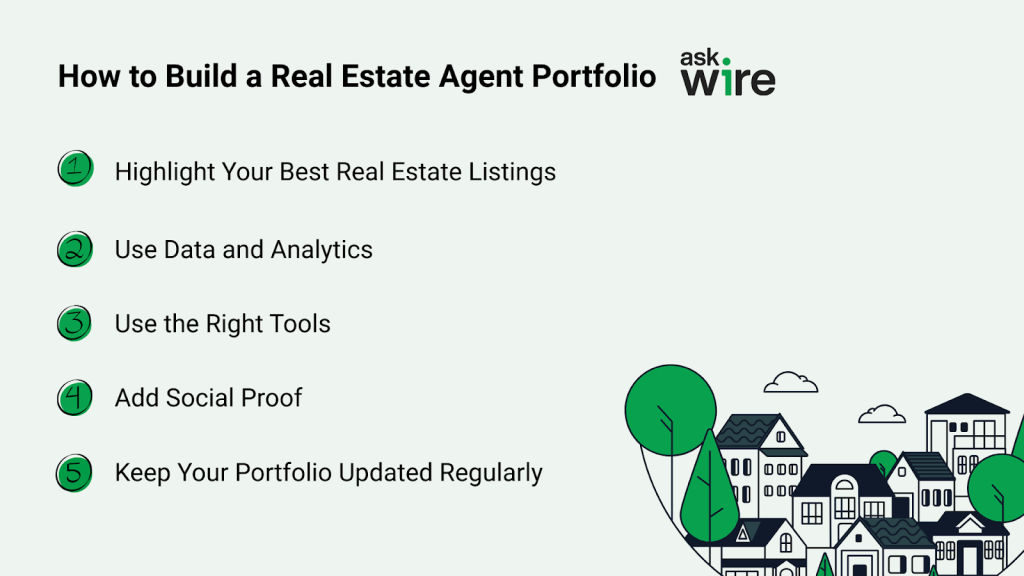
Step #1: Highlight Your Best Real Estate Listings (Past & Present)
Your listings are the backbone of your portfolio. Select the ones that best represent the kind of work you want to attract more of.
Include:
- High-quality photos and virtual tours
- Property details and unique selling points
- Your role in the sale
- The marketing strategy you used
- The outcome (e.g., “Sold in 12 days above asking price”)
Step #2: Use Data and Analytics to Prove Your Value
One of the most effective ways to elevate your portfolio is by integrating market insights, comparative analytics, and performance metrics. This is where tools like Ask Wire make a difference.
You can include:
- Local market trends
- Average days on market for your listings
- Price-to-sale ratios
- Neighborhood data visualizations
- Buyer behavior insights
When clients see that you rely on data (not guesswork) they instantly perceive you as more professional and prepared.
Step #3: Use the Right Tools
Nowadays, using the right tools (AI powered or not) is essential to stay organized and save valuable time through automations.
At AskWire, we’ve built a product specifically for real estate agents to organize their portfolio and enhance client interactions with personalized & data-backed advice.
Have a look at how easy it is to use here:
You simply add your listings, add details about them, upload relevant files, and you have everything organized into one place.
Plus, you can see them all on the map and even get an AI valuation report for a property!
Step #4: Add Social Proof: Testimonials and Success Stories
People trust other people’s experiences more than marketing messages. Include testimonials that highlight your strengths and personality.
For best results:
- Use short, specific quotes
- Add names, dates, and property types (when possible)
- Include both buyer and seller feedback
A strong testimonial can overcome objections before they even come up.
Step #5: Keep Your Portfolio Updated Regularly
A portfolio is a living document. If it’s outdated, it gives the impression that your business is too.
Set a monthly reminder to:
- Add new listings
- Update sold properties
- Refresh testimonials
- Insert new market data
- Remove irrelevant content
A portfolio that evolves with the market shows you’re active and informed.
Final Words
According to studies, 87% of new real estate agents fail within 5 years, mainly due to lack of leads, poor marketing, and low differentiation.
So staying organized and having a clean portfolio can play a crucial role in succeeding as a real estate agent.
If you’d like to give our real estate portfolio a try, simply start a free trial here and let us know what you think about it!